Assal Diving Center

Dive Sites

Strait Of Gubal Sites , Dahab Sites
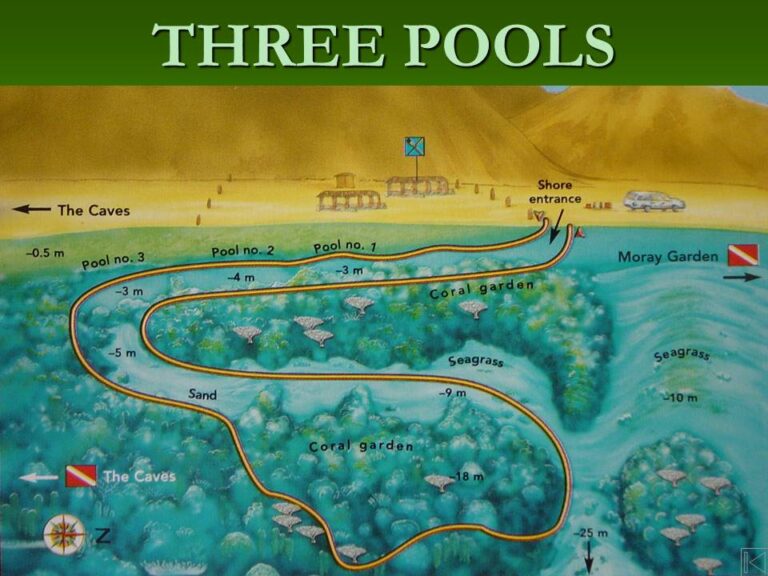
This dive site starts with a series of three natural pools with a sandy bottom.

After exploring the third pool, exit into open water. Once out into open water you will find a hard coral slope with massive pore corals and small pinnacles between which you can find salad corals and brain corals. Descend to a depth of 15 / 20 metres and circle a sandy plateau while keeping the reef on your left. End the dive by coming back to your starting point.
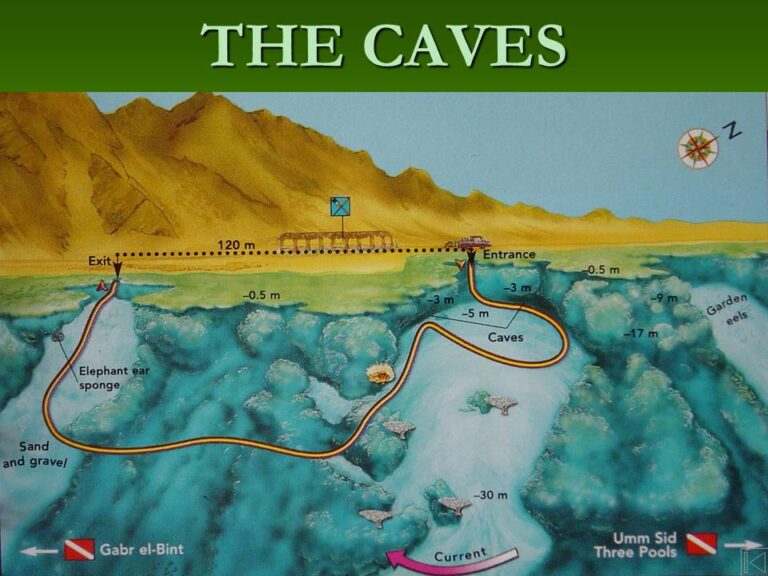
The Caves can only be dived in calm conditions as jumping off the ledge can be quite tricky when there are waves crashing on the shore. Once in the water the cave is directly below you and on both the left and right side you will find a shallow reef. Here you will often spot large groupers, scorpionfish and morays and a tiger shark has been spotted on a number of occasions.
 
Enter the cave and swim to the back then turn and watch the light shine through the swarms of anthias and bannerfish swimming upside down on the ceiling of the cave, a perfect spot for your safety stop!
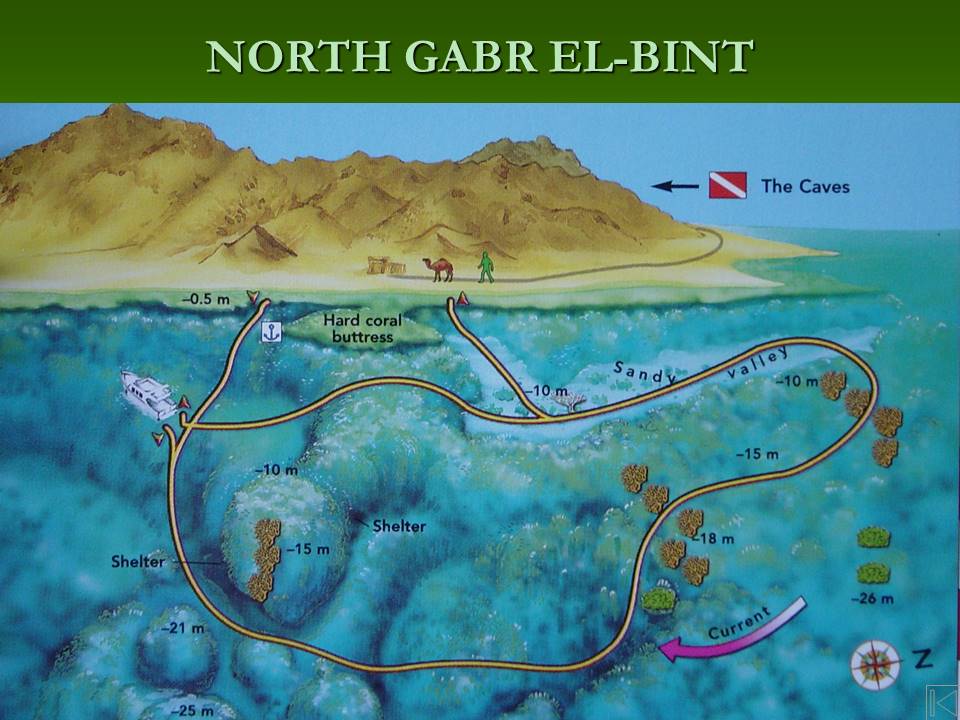
Gabr el Bint ranks among one of the most attractive sites of North Sinai. With the access by boat, 4×4 or by camel. Gabr el Bint means ‘The Grave of the Girl’ in Arabic. The ledge is riddled with exquisite coral heads that attract numerous reef species, including swarms of anthias, scorpionfish, parrotfish, crocodilefish, surgeonfish, triggerfish, trumpetfish, stingrays and very often a turtle.
 
At the end of the ledge usually is home to a shoal of black and white snappers and twinspot snappers hang here between 5m and 10m.

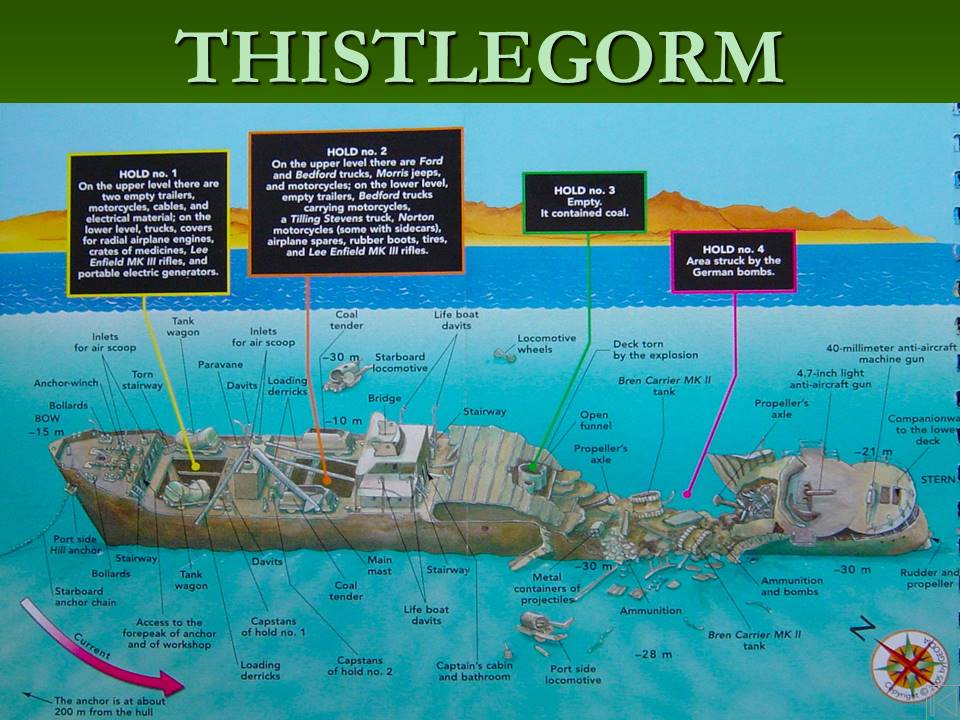
The world famous wreck SS Thistlegorm was sunk in 1941 in the area of Sha’ab Ali in the Gulf of Suez. She was packed to the gunwales with a cargo of supplies destined for the British fifth army based in Alexandria. Armoured Bren-Gun carriers, BSA motorcycles, jeeps, trucks, rolling stock, aeroplane parts, stacks of rifles, radio equipment, munitions, and a plentiful supply of Wellington boots can all be seen during your dive.

The Thistlegorm is heaven for wreck enthusiasts, but is also one of the most underrated fish dives in the area, attracting schooling barracuda and providing a hunting ground for giant tuna and snapper.
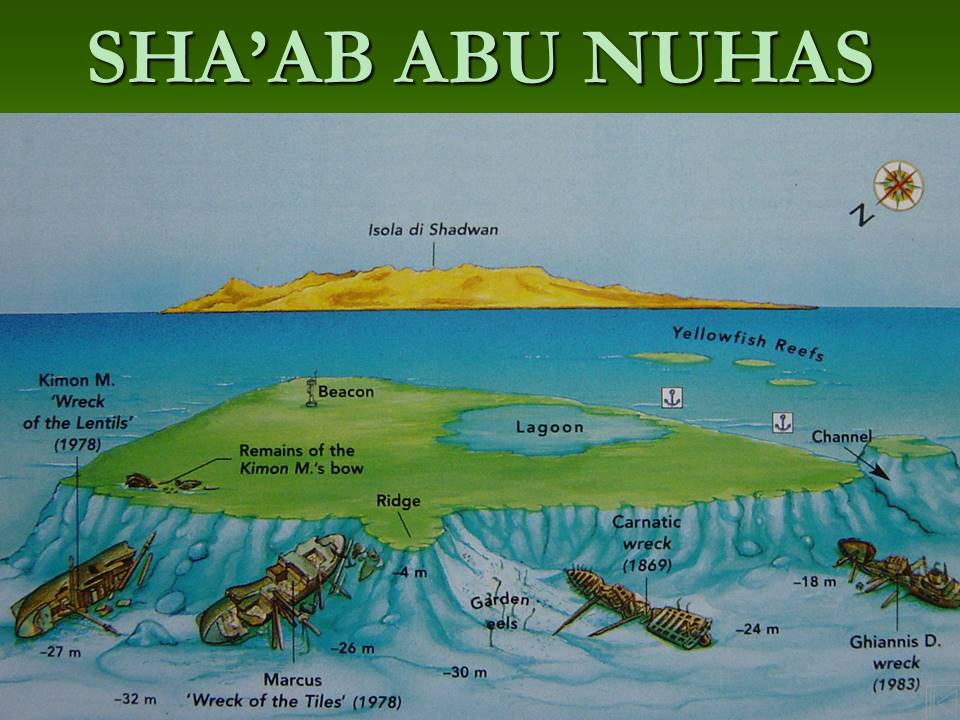
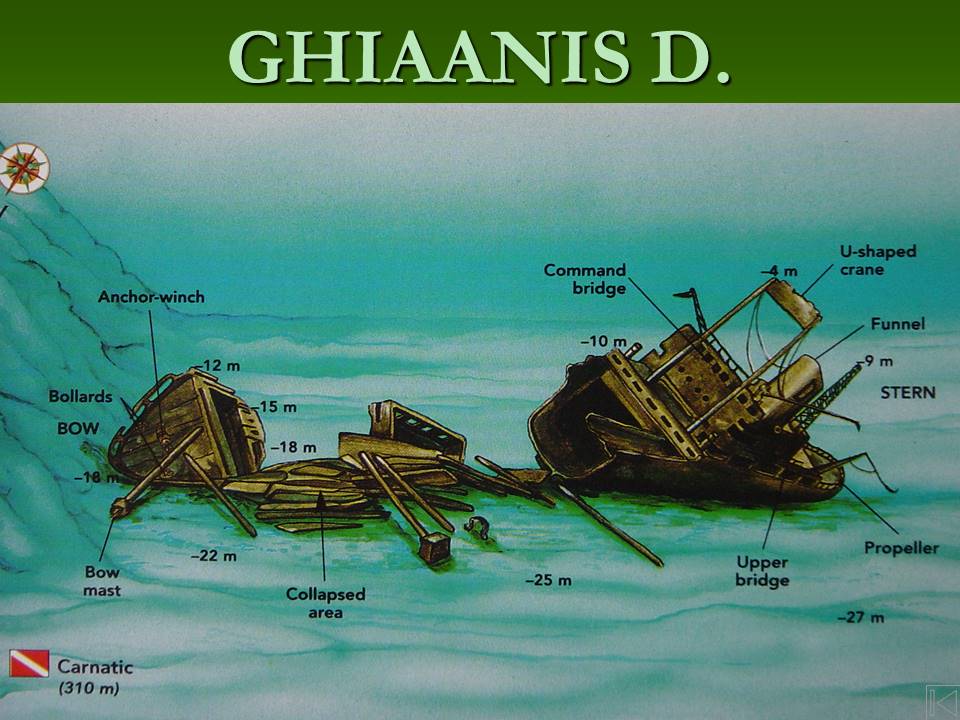
The Loss of the Giannis D: In April 1983, the Giannis D was loaded with sawn timber at Rijeka, Croatia destined for Saudi Arabia and Yemen. The ship made good time through the Mediterranean and down through the Suez Canal.
 
On 19 April 1983 she was approaching the Straits of Gobal at full speed when the ship was seen to suddenly veer sharply from her course and drive hard onto the north west corner of Sha’ab Abu Nuhas Reef. The crew abandoned the vessel and were safely rescued.

drift dive around the outer wall of the South
Laguna of  Tiran island
  from either the 
Laguna entrance
 to the green  beacon 
or vice versa  depending on the current. 

Schools of butterfly fish gather along  
the hard coral wall with stunning glassfish pinnacles 
adorned with Gorgonian fan corals lining the plateau.
This is a dive for all levels that is rich in marine life with
the chance to spot larger pelagic species cruising along in the current.
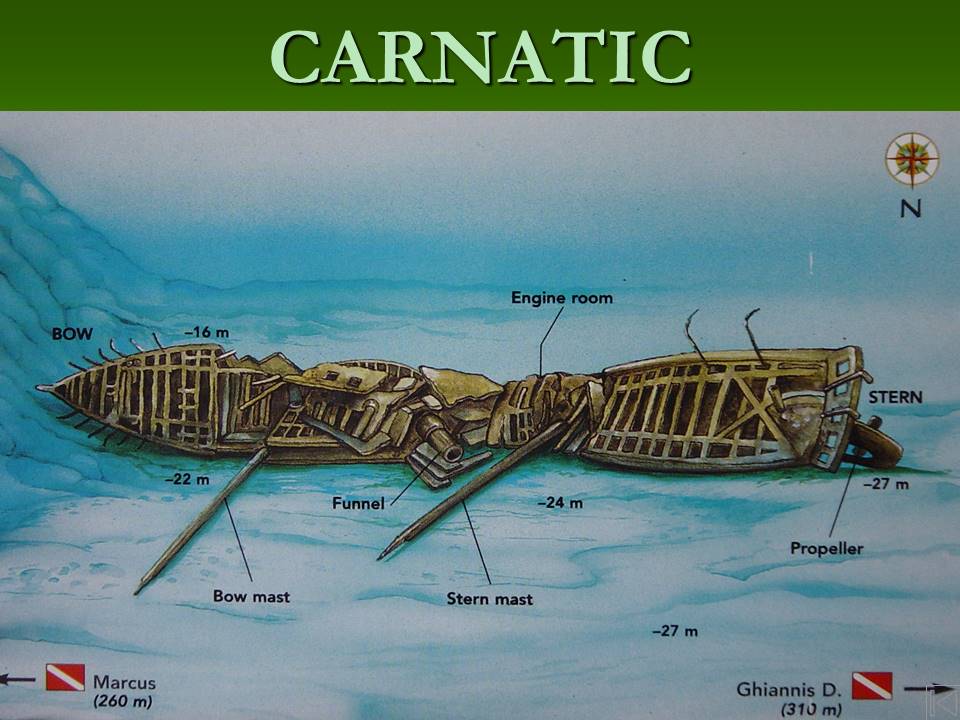
This site is accessible by car from Dahab in about ten minutes. Getting into the water is fairly easy and is done from the beach.
 
After crossing an area of sand then a seagrass, we arrive at a succession of line of corals starting from the beach and sinking towards the sea. the abundance of corals makes it a very colorful site full of marine life.
 
The return to the exit is through a shallow coral garden in which we regularly encounter geometric moray eels.
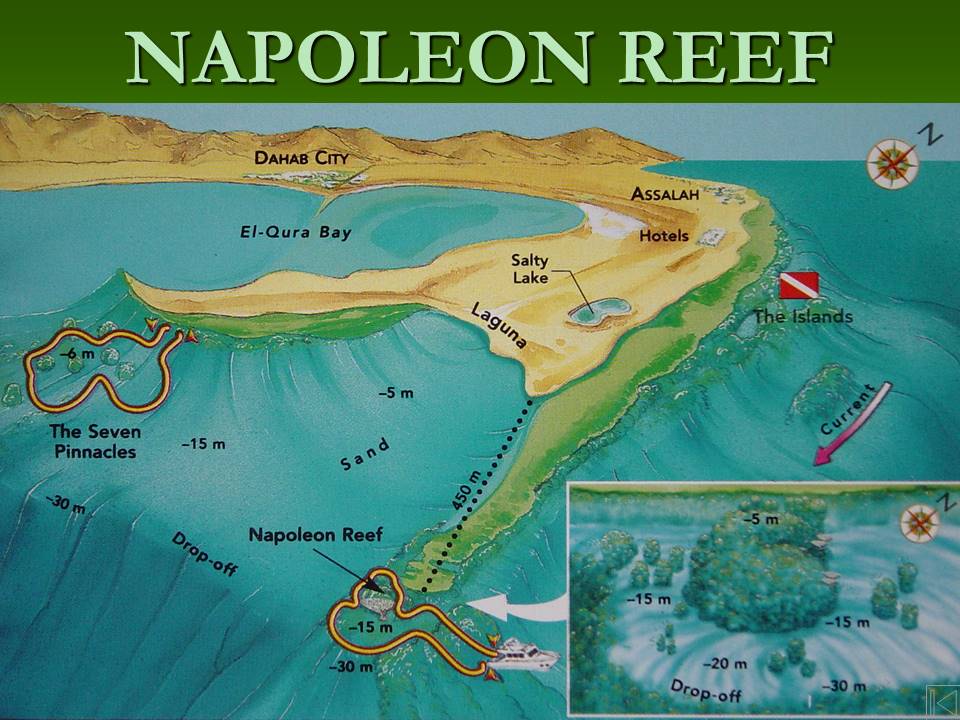
This site is situated in the Laguna, in the area known as the ‘Spit’. This site best reached by boat or zodiac as it lies approximately 450 metres away from the beach.
 
The huge Madrepore tower is separated by a channel from the half submerged reef.
It comes up from a sandy sea bed at around 20 metres and is frequented by plentiful fauna and Napoleonfish to whom the site owes its’ name.
 

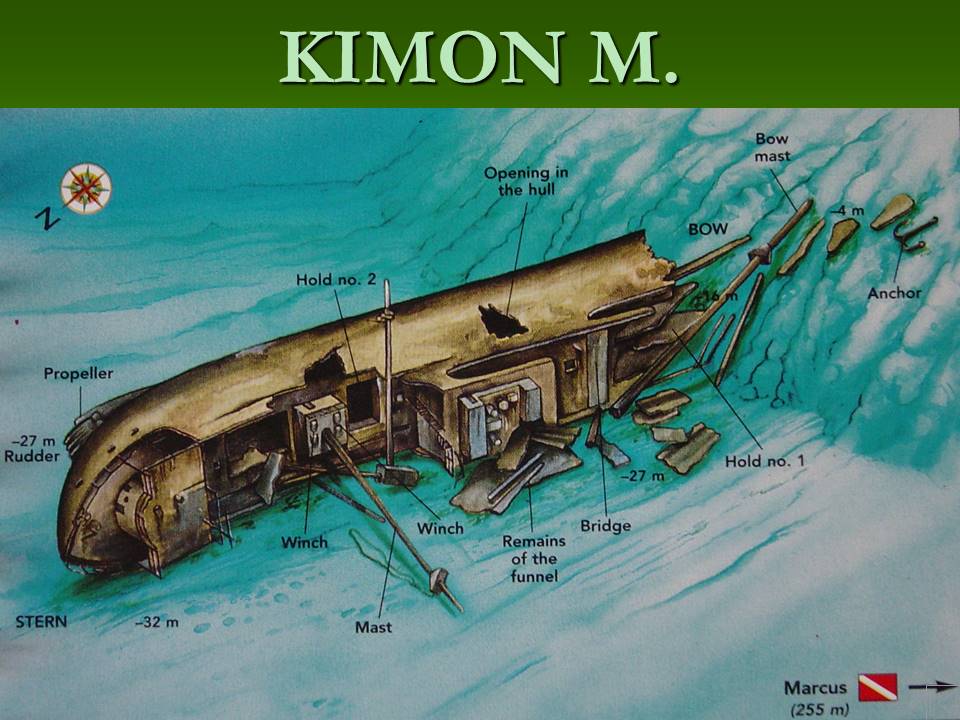
Diving the Kimon M offers an intriguing experience. The front section, extending back to No. 2 Hold, has become a debris field scattered across the reef. The remainder of the ship, however, provides a series of excellent dives.

The view through the remnants of No. 2 Hold to the reef is exceptional. The engine room is hazardous due to ongoing deterioration.

Divers typically swim along the port side to the stern, where the propeller and rudder are located. Rounding the stern, divers find the rear decks and sections of the ship that remain largely intact.
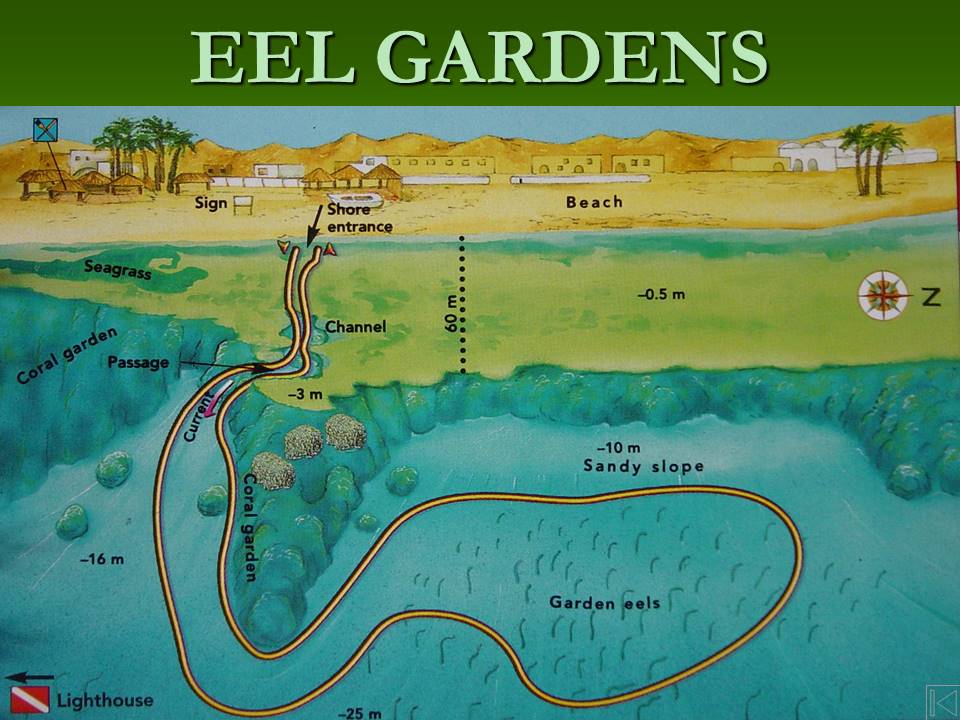
Eel Garden dive site in Sharm El Sheikh features an endemic species of garden eels and is a full drift dive over a large, triangular sandy plateau that reaches depths of up to 50m.

Completed as a full drift dive, keeping the reef wall on their right shoulder, divers can expect to see swathes of these meter long eels retreating into the sand in a huge Mexican wave as they swim by.

Other interesting species to look out for are sand divers and juvenile razor blennies.
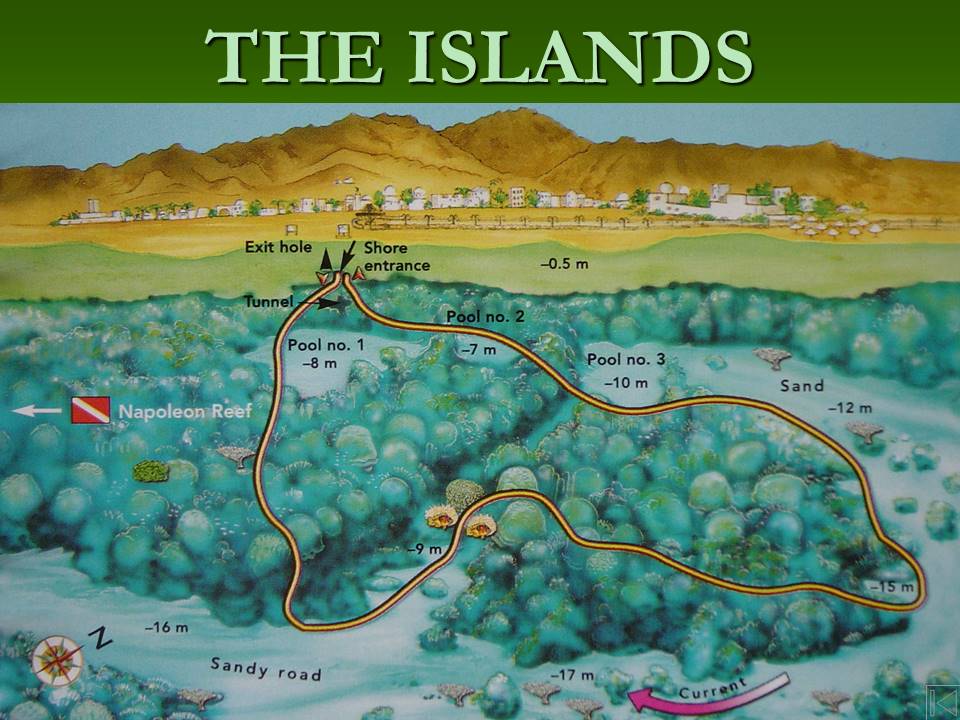
A coral maze which truly shows the Red Sea coral at its best. Three giant pinnacles have grown together over the ages to create a playground of valleys and lagoons full of every reef fish you can imagine.

One of the lagoons is home to thousands of juvenile barracuda, with trevally and large snapper always in attendance guarding their larder!

An earthquake 10 years ago collapsed huge sections of the reef exposing holes and cracks that are rapidly filling up with renewed coral growth.
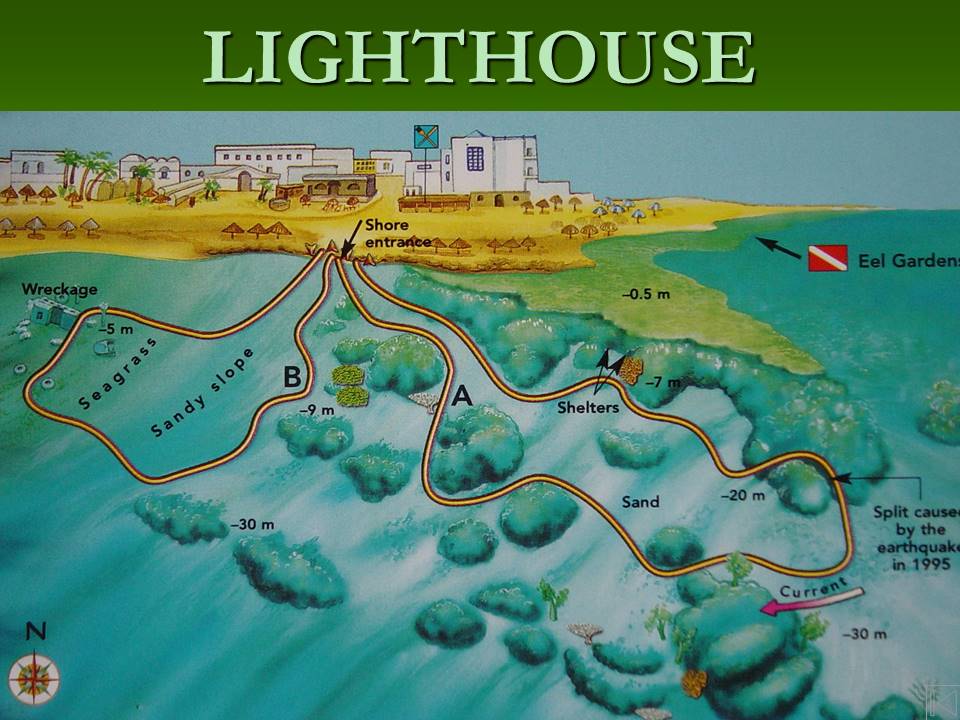
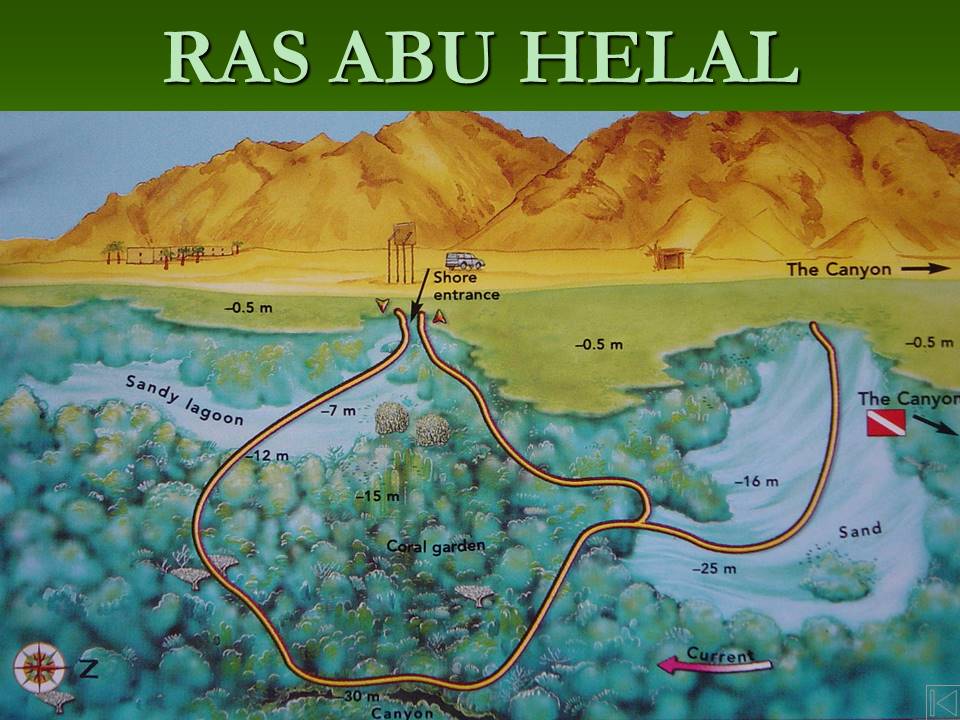
Starting with schools of Barracudas, it’s not rare to meet Napoleon Brasses, Octopus, Scorpion and Crocodile fish between giant pinnacles full with soft and hard corals.
So many different options to dive this dive site.
 
One of our favourite approaches is coming behind those giant pinnacles, swim over the saddle into an amazing coral garden with huge table corals and gorgonians.
The way back leads again over the saddle and with an awesome coloured reef to your right, you will have more than plenty opportunities to feed your camera.
Ras Abu Helal, also known as ‘Little Canyon’ translates as, ‘Headland of the Crescent Moon’, referring to a crescent-shaped reef south of Abu Talha.
Abu Helal and Abu Talha can only be dived at high tide in perfect conditions which leads to them being dived much less than other sites making the corals in pristine condition. This site has everything for both technical and recreational diving. The reef encircles a shallow lagoon at about 12m. Outside is a gently sloping bay and on its northern side a broad ridge. 
Alternatively there is a deeper canyon dive in 30 – 40m at the end of this ridge.
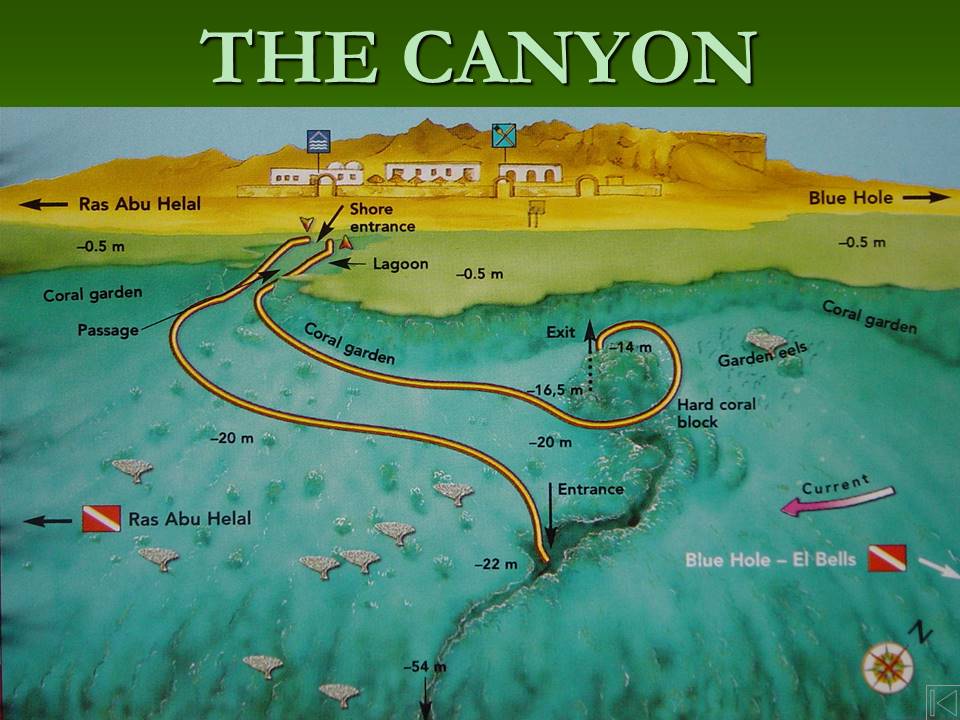
The Canyon dive site is on the way to the Blue Hole. Most likely you’re going to dive here as well when you go to the Blue Hole. You will have a short swim through a shallow sandy lagoon. The exit of this lagoon and the following pinnacles are just breathtaking and will blow your mind.
 
From 5-20m you’ll find a beautiful garden of corals and then discover the canyon itself – a split between the reef going down to 54m. Beautiful soft and hard corals as well as the chance to see Octopus en masse, making this dive truly amazing.

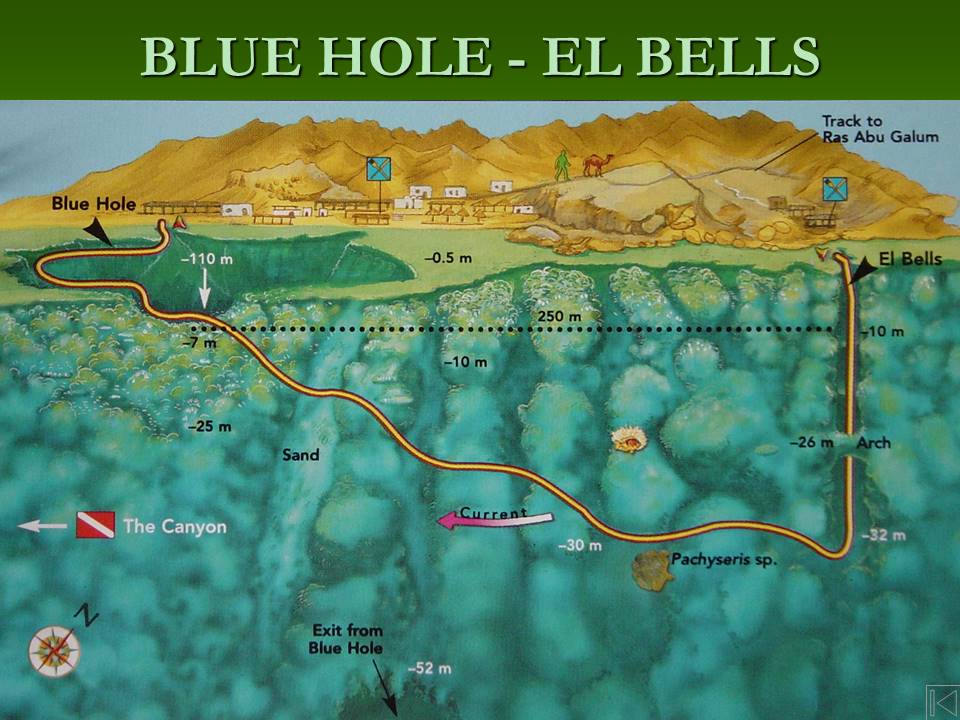
Located 12km North of Dahab, the famous Blue hole dive site is a large submarine sinkhole, 150m across and 110m deep. We start the dive at El Bells, entering at a crack in the reef plate and descending into an open chimney lit beautifully by the sun with an arch swim through at 26m.

Once on the other side of the arch you have a beautiful hard and soft coral reef wall with impressive plate coral formations, large barracuda and well established anemones dotted along your route. Finishing your dive swimming across the inky depths of the blue hole, watching free divers disappear and reappear as you swim by is the perfect way to dive this site.
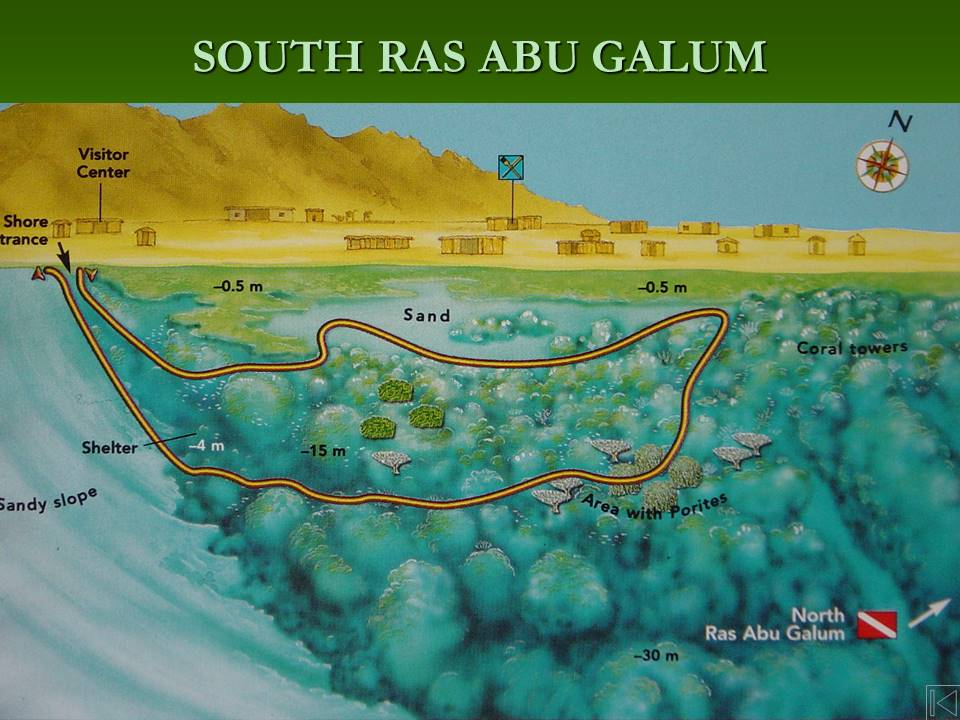
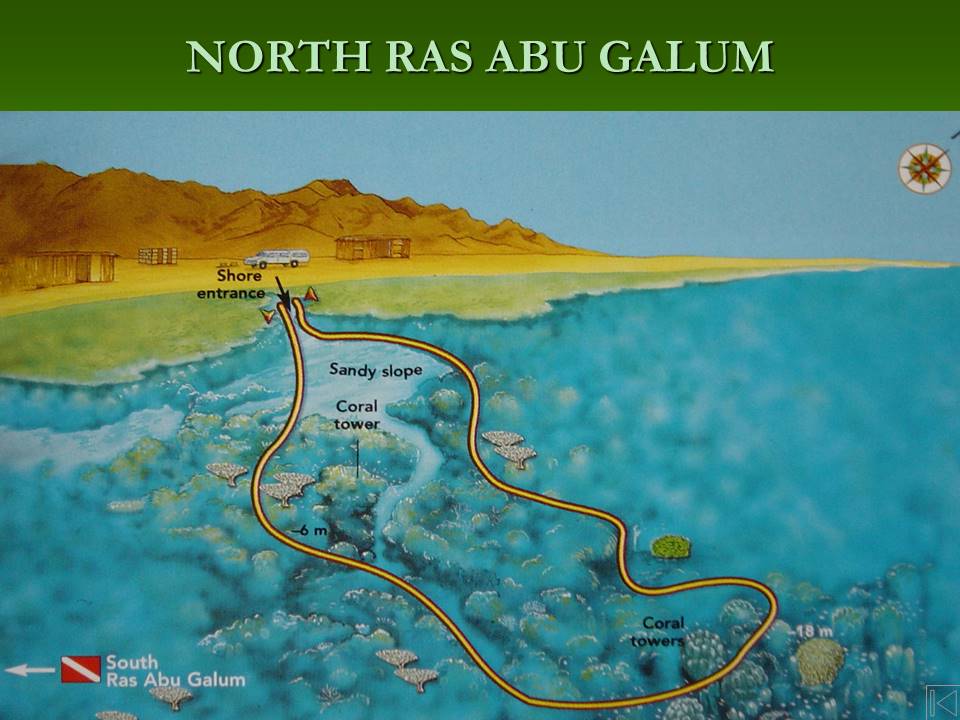
This dive site has an average depth of 20-30m which suits divers of all levels. Diving here is often started at a sandy slope that descends from the shore with the reef wall starting on both sides.
 
Lots of pinnacles, dramatic rock formations and a great variety of marine life can be explored at this dive site. Ras Abu Galum is also the site you want to experience a camping adventure. Accessible only by boat or camel this place offers original Bedouin huts, dinner stargazing and breakfast. Adventure lovers will not be disappointed.
The northern part of the site is famous for its coral gardens.
 
Ras Abu Galum is also the site you want to experience a camping adventure.
 
Accessible only by boat or camel this place offers original Bedouin huts, dinner stargazing and breakfast. Adventure lovers will not be disappointed.